

By His Grace and Blessings, I write
Ageing and the Biology of Meditation
The story
It was like any other day in the life of Elizabeth Blackburn. She was working in her lab when a young psychologist happened to visit her with a very strange idea. Elizabeth, unexpectedly showed interest in the idea. And the rest is history.
To some of us who don’t know, Elizabeth Blackburn is a Nobel laureate scientist and a biologist. Her work is on telomeres and telomerase and their role in ageing. She was named one of the 100 most influential persons by Time magazine in 2007.
The young psychologist who met her on that day was Elissa Epel, a post doc in psychology. Epel was interested in study of damage done to body by chronic stress and wanted Blackburn to study the physiological fallout of a psychological problem. Epel wanted to test the idea whether chronic stress had any effects on telomeres. For this she met Dr Blackburn on that day.
The background and the science:
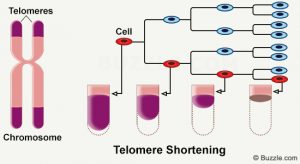
In 1970, Dr Blackburn had discovered telomeres which are cap like structures found on the human chromosomes. They shield the end of chromosomes each time when the cells divide and DNA is copied. In 1984, she discovered an enzyme called telomerase that can protect and rebuild telomeres.
One of the hallmarks of ageing are the length of telomeres as proved by Blackburn through her research. Our telomeres dwindle overtime and when they get too short, our cells start to malfunction and loose their ability to divide, a phenomenon that is key to the process of ageing. Elizabeth discovered that despite the presence of telomerase that protect the telomeres, they continued to dwindle. We have around 35 trillion cells in our bodies which overturn every 8 years. So, with every cycle we lose the length of telomeres and we age. Age related conditions from osteoarthritis and obesity to heart diseases, Alzheimer’s and stroke have all been linked to shortening of telomeres.
The Testing and the Results:
Epel and Dr Blackburn embarked on the project whereby they wanted to test the effects of chronic stress on human bodies. In words of Dr Blackburn,” I was interested in the idea that if we look deep within cells, we might be able to measure wear and tear of stress and daily lives”.
Epel derived her motivation from the pioneering research of biologist Hans Selye, who for the first time in 1930s described how stressed rats can become chronically ill. In words of Hans,” Every stress leaves an indelible scar, and the organism pays for its survival after a stressful situation by becoming a little older”. Epel was interested in scars left by stress on human bodies and how stress ages us.
So, a research project to discover the connections between stress and telomeres was undertaken and continued for 7/8 years. This experiment on stressed mothers revealed that more stressed the mothers were, the shorter the telomeres and lower the levels of telomerase they had. The most frazzled woman in the study had telomeres that took them into an extra decade or so of ageing compared to those who were less stressed. The research proved that there was a direct connection between real life experiences of stress to the molecular mechanics inside the cells i.e. telomeres lengths and quantity of telomerase inside the cells. A paper published in 2004 proved that feeling stress does not just damage our health, it literally ages us.
All of us have such experiences. When we observe a person, who is stressed on account of say some chronic sickness or due to any other reason, the signs of ageing immediately become visible. The greying and loss of hair, the sagging skin and stooped posture etc are signs of ageing that can be seen in a chronically stressed person. This phenomenon is observable even in otherwise healthy individuals who have faced some stressful situations, like Alzheimer’s caregivers, victims of domestic abuse and early life trauma and people with post traumatic disorders.
Lab studies have shown that stress hormone cortisol reduces the activity of telomerase, while oxidative stress and inflammation -the physiological fallout of psychological stress- appear to erode telomeres directly.
All her lab studies and experiments led Dr Blackburn to look for effective interventions that slowed the erosion of telomeres and telomerase. Trials further conducted by her showed that exercise, eating healthy, family and social support and better relationships etc all helped. However, meditation was found to be the most effective intervention that lengthened the telomeres and reversed biological ageing. …to be continued..
By His Grace and Blessings, I write…
Dr. Seema Chaudhary